
Silicone Rubber Over Fibre Glass Braid
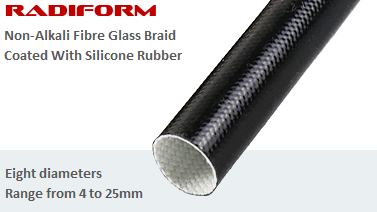
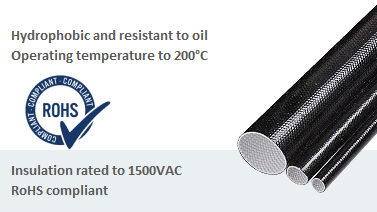
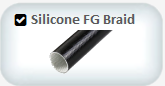
Radiform silicone rubber over fibreglass tube offers protection to wiring or cabling from high temperatures and medium voltages to 1.5kV. The woven non-alkali fibreglass tube is sheathed and heat bonded with silicone resin. Available in 8 sizes covering 4mm to 25mm inside diameter. Designed initially for the electrical industry, machine building, lighting and appliances, it is also used in automotive, marine, or anywhere that a flexible and durable tubular protecting material is required within a temperature range of -40°C to +200°C

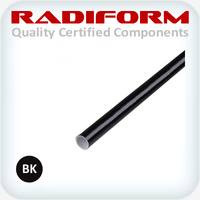
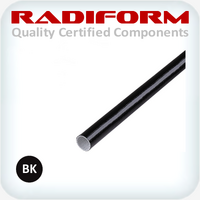
Advanced Fibreglass Matrix and Silicone Resin Co-Moulding
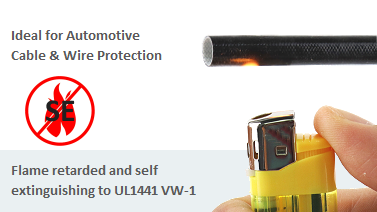
Standard plastic conduits and general-purpose heat shrink sleeves can quickly melt, char, or experience structural dielectric breakdown when subjected to intense localised heat or continuous open flames. Our high-performance Radiform composite sheathing completely overcomes these extreme vulnerabilities through a robust, dual-layer construction. The inner core features a tightly woven, non-alkali fibreglass tube that is uniformly sheathed and heat-bonded with premium-grade silicone resin. This specialised composite design provides excellent thermal shielding and a robust environmental defence, allowing the sleeve to absorb intense physical impacts, resist abrasion, and maintain an unwavering current barrier up to 1.5kV without cracking or degrading.
Extreme Thermal Stability and Broad Industry Versatility
Achieving total safety and matching code compliance across high-risk machinery layouts requires shielding materials that handle constant movement and severe operating limits. Stocked online in eight versatile sizes covering 4mm to 25mm inside diameters, this rugged non-slit tube safely operates within an expensive thermal spectrum ranging from a freezing -40°C all the way up to an intense +200°C. Designed initially for the electrical industry, machine building, heavy lighting installations, and high-heat appliances, its outstanding durability has extended its deployment across diverse trade sectors. Today, it is heavily relied upon across the automotive, motorsport, mining, and commercial marine sectors to safely jacket wiring looms, fuel lines, sensor leads, and battery cables running directly adjacent to hot exhaust manifolds, turbochargers, and heavy industrial engine blocks
Frequently Asked Questions
What sets silicone-coated fibreglass sleeving apart from standard heat shrink?
Standard heat shrink tubing is designed for general-purpose insulation and requires a heat gun to recover, typically handling temperatures only up to 125°C or 150°C before melting. Radiform silicone fibreglass sleeving is a flexible, non-shrinkable composite sleeve engineered explicitly for extreme thermal zones, withstanding continuous exposure up to 200°C and providing dedicated medium-voltage protection up to 1.5kV without relying on a thermal recovery step.
What size range is available for purchase online?
We accommodate commercial trade projects of any scale by offering this specialised high-temperature sheathing in eight independent sizes. Our versatile sizing portfolio covers inside diameters starting from a slim 4mm for individual sensor wires and instrument leads, up to a broad 25mm to comfortably manage large primary cable bundles and flexible rubber hoses.
How does the material handle contact with common workshop chemicals?
The exterior silicone resin coating creates a completely non-porous chemical barrier, delivering outstanding resistance to aggressive industrial chemicals, automotive fluids, mechanical grease, lubricating oils, and common workshop solvents, ensuring that the inner non-alkali fibreglass weave remains perfectly dry and structurally protected.
Can this sleeving be easily routed through tight vehicle chassis paths?
Yes, despite its thick-walled, heavy-duty composite structure, our silicone-coated fibreglass tube maintains exceptional multi-directional flexibility and a smooth internal bore, allowing installers to effortlessly thread complex wire looms through the sleeve and route the protected assembly smoothly around sharp bends, chassis brackets, or tight industrial engine compartments.